
Feature docs · KVKK & privacy
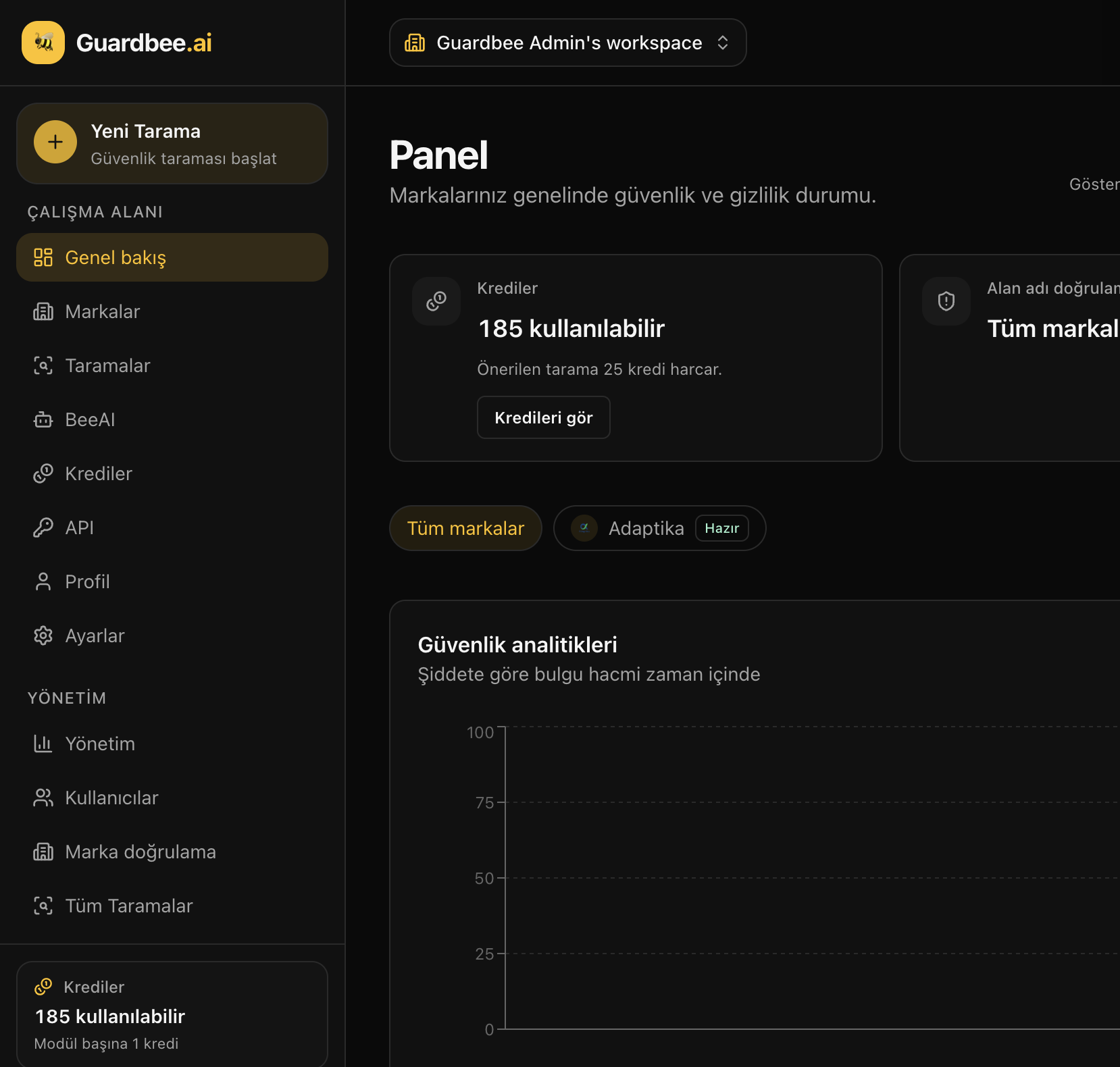
KVKK compliance is not only legal text — it shows up as visible signals on your site. Guardbee scans notices, cookie consent, contact channels, trackers, VERBİS, and form consent so teams share one compliance language.
Core KVKK checks
- Privacy / aydınlatma policy links
- Cookie banner and preference-centre signals
- Data-subject contact / request channel
- Form consent / acceptance signals
- Tracker disclosure needs
- Cookie categories and reject / essential-only path
- VERBİS and controller-identity signals
- Cross-border transfer disclosures
Advanced checks
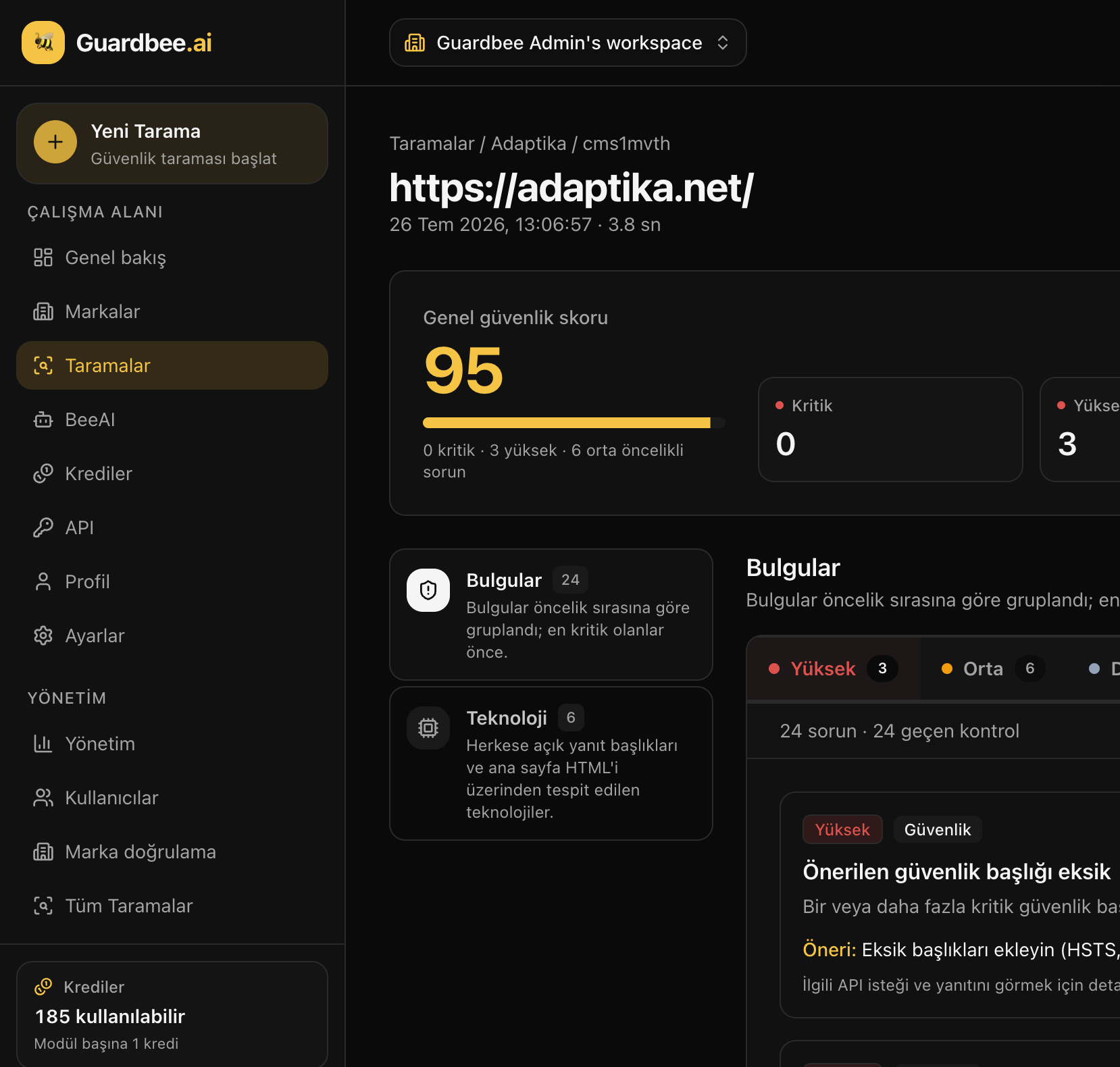
- Notice content quality (Art. 10 themes)
- Prechecked consent controls
- Separated marketing / commercial consent (İYS signals)
- Children’s data and sensitive-data collection signals
- Cookies/trackers before opt-in (consent runtime)
- Processor inventory — third-party hosts contacted by the page
- Policy-change tracking across scheduled scans
- Consent withdrawal / preference management paths
- Whether reject actually stops trackers on a fresh load
- Deep PII patterns and form minimization
- Dedicated cookie policy page
- Traffic PII crawl for email, phone, TCKN, IBAN signals
Business impact
Missing notices or misleading cookie UX are both trust and compliance risks. Guardbee is not legal advice — it measures visible signals and priorities so legal, product, and marketing speak from the same screen.
Related guide
Run these checks with Guardbee
Add your brand, pick the modules that matter, and get findings in business language. Start with a 14-day free trial.
Frequently asked questions
Does this scan provide legal approval?
No. Guardbee measures visible compliance signals — it is not formal legal opinion or a KVKK audit.
Does VERBİS detection prove registration?
No. It looks for on-site VERBİS / identity disclosures, not official registry confirmation.
What does Traffic PII do?
A browser crawl maps email, phone, TCKN, IBAN-like PII patterns in traffic.